

Many Indian startups continue to show big losses even after years of growth. The latest numbers from company filings for the financial year 2024-25 (FY25) give a clear view of where the cash burn is highest.
Swiggy sits at the top with a loss of ₹3,167.7 crore. Ola follows with ₹2,276 crore. These figures come from filings submitted to the Ministry of Corporate Affairs and have been tracked by Tracxn.
Here is the full list based on the available data:
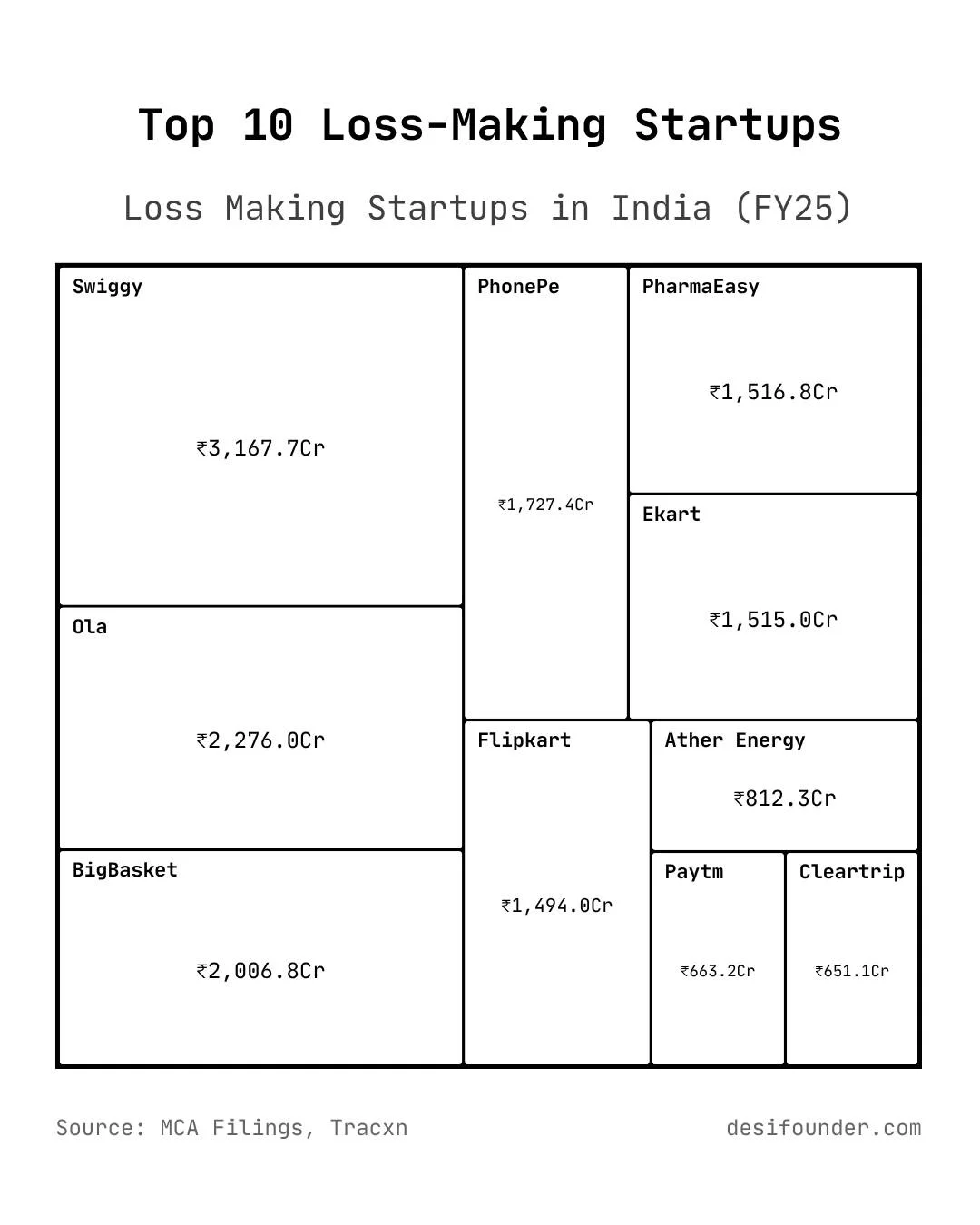
- Swiggy: ₹3,167.7 crore loss
- Ola: ₹2,276 crore loss
- BigBasket: ₹2,006.8 crore loss
- PhonePe: ₹1,727.4 crore loss
- PharmaEasy: ₹1,516.8 crore loss
- Ekart: ₹1,515 crore loss
- Flipkart: ₹1,494 crore loss
- Ather Energy: ₹812.3 crore loss
- Paytm: ₹663.2 crore loss
- Cleartrip: ₹651.1 crore loss
These numbers reflect the high costs that come with running large operations in food delivery, ride-hailing, e-commerce, and fintech. Companies spend heavily on logistics, customer acquisition, technology, and expanding their networks. Even with strong revenue growth in some cases, turning profitable takes time.
For example, Swiggy has been investing a lot in quick commerce and delivery infrastructure. Ola and Ather Energy put money into manufacturing and service networks. PhonePe and Paytm focus on growing users and new financial products. Flipkart and Ekart deal with supply chain and competition pressures.
Startups That Missed the Top 10 List
A few well-known names recorded large losses but did not enter the top 10.
Cred, the fintech platform started by Kunal Shah, reported a total net loss of ₹1,457 crore in FY25. Its operating revenue grew 16% to ₹2,735 crore, and operating losses fell sharply by 51% to ₹298 crore. The company has been working on better monetization and user engagement, which helped improve some parts of its numbers.
In the quick commerce space, Zepto saw its losses widen significantly to ₹3,367 crore in FY25, even as its sales jumped 129% to around ₹9,668 crore. This high burn comes from aggressive expansion, new dark stores, and competition in the fast delivery market.
Other companies like Unacademy, Yubi, and several D2C or EV brands also reported losses in the hundreds of crores, though exact figures vary.
What These Numbers Mean for Founders
Looking at this list, a few things stand out clearly.
Heavy spending on growth often leads to big absolute losses, especially in sectors that need strong logistics or user acquisition. Many of these startups have built large customer bases, but turning that scale into steady profits remains a challenge.
The good part is that some companies are showing progress. Losses are narrowing in operating terms for players like Cred and PhonePe in certain areas. This suggests that focusing on unit economics and cost control can make a difference over time.
For anyone building a startup, these filings offer a useful reminder. Losses are common when you scale fast, but tracking how quickly they reduce and how revenue grows healthily matters more in the long run.
The data is based on MCA filings compiled and shared by Tracxn for FY25. Some numbers may see minor adjustments after final audits.
We will keep an eye on future filings and updates as more companies work towards profitability.
This is part of our ongoing look at Indian startup trends and market shifts case studies on desifounder. We will keep sharing updates as new numbers come in.


Comments
Add a Comment